

Alibaba's AI Leap: Are We Witnessing the Dawn of Intelligent Commerce?
The news is crackling with Alibaba's latest earnings report, and while the raw numbers are impressive – a 5% revenue jump to RMB 247.80 billion – the real story is buried a little deeper, shimmering beneath the surface like a vein of pure gold. It's not just about the money; it's about the shift. It's about Alibaba planting its flag firmly in the burgeoning landscape of AI-driven commerce, and what that means for all of us.
Forget the incremental gains; we're talking about a potential paradigm shift. CEO Eddie Wu says Cloud Intelligence Group's revenue rose 34%, with AI-related product revenue achieving triple-digit year-over-year growth for the ninth consecutive quarter. Let that sink in. Nine quarters of explosive growth. This isn't a flash in the pan; this is a sustained surge.
What does this mean in concrete terms? Imagine a world where your online shopping experience is hyper-personalized, not just based on past purchases, but on predictive AI that understands your needs before you even articulate them. Coding assistants streamlining development, logistics optimized to near-perfect efficiency, and customer service that anticipates your questions before you even type them. Alibaba is building the infrastructure for that world, right now.
The AI-Commerce Symbiosis
The beauty here is the symbiotic relationship between AI and e-commerce. Alibaba's massive data troves, accumulated over years of serving billions of customers, provide the perfect training ground for its AI algorithms. And in turn, those algorithms are supercharging the entire e-commerce ecosystem. It's a feedback loop of innovation, and it's accelerating at an astonishing rate.
CFO Toby Xu mentioned that Alibaba is reinvesting profits and free cash flow into AI and cloud infrastructure, deploying approximately RMB 120 billion in capital expenditure over the past four quarters. That's a massive bet, and it speaks volumes about Alibaba's long-term vision. They're not just chasing short-term profits; they're building the foundation for a future where AI is seamlessly integrated into every facet of commerce.
Consider the implications for smaller businesses. Imagine a small boutique leveraging Alibaba's AI-powered tools to personalize its marketing, optimize its inventory, and provide customer service that rivals the biggest corporations. This levels the playing field, empowering entrepreneurs and fostering innovation at every level.
But with this power comes responsibility. As AI becomes more deeply integrated into our lives, we must be vigilant about ethical considerations. How do we ensure fairness, transparency, and accountability in AI-driven systems? How do we prevent bias and discrimination? These are critical questions that we must address proactively, as a society.
Remember the introduction of the printing press? It democratized knowledge, empowering individuals and transforming society. But it also raised concerns about misinformation and the control of information. AI is a similar technological leap, with the potential to reshape our world in profound ways. And just like the printing press, we must harness its power wisely and ethically.
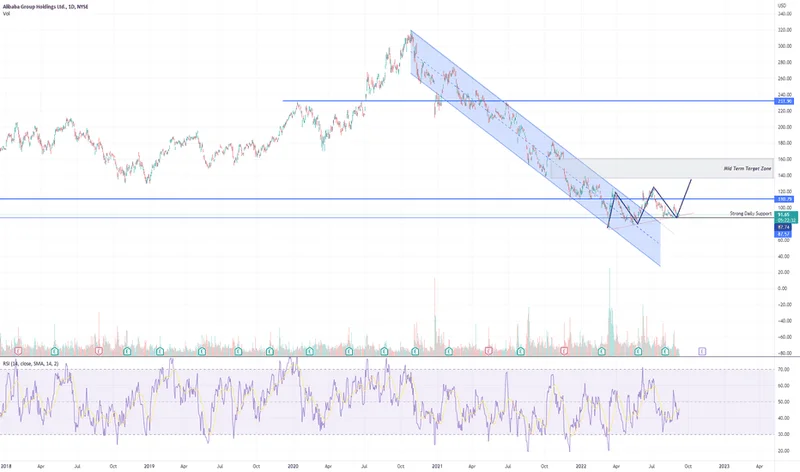
Alibaba's stock is responding in kind, with shares gaining nearly 4% in premarket trading. And the retail sentiment? It's jumped from "extremely bearish" to "bullish," according to BABA Stock Rises Pre-Market As AI-Driven Cloud Growth Drives Revenue Beat Stocktwits data. People are starting to see the potential, the transformative power of this AI-driven shift.
The Future is Being Written Now
What does this all mean? It means we're on the cusp of a new era of intelligent commerce, where AI empowers businesses, enhances customer experiences, and unlocks unprecedented levels of efficiency and personalization. It means the line between the physical and digital worlds is blurring faster than ever before. It means the future is not something that happens to us; it's something we are actively creating, right now.